
Chongqing Transport Guide: Metro, Monorail, Airport, Stations and Hill-City Transfers
A first-time visitor transport guide for Chongqing, covering metro and monorail planning, airport and rail-station transfers, taxis, station exits, elevation, and realistic route timing.
Recommended in the Same City
Quick Answer
Use Chongqing metro and monorail lines for predictable movement, then add taxis or ride-hailing for luggage, rain, late nights, or awkward last-mile transfers. Always check the station exit and elevation. In Chongqing, the right exit can save more time than choosing the closest station on a map.
Why Chongqing Transport Feels Different
Chongqing is a hill city built around rivers, bridges, cliffs, tunnels, and layered roads. A destination may look close, but the walking path can involve stairs, elevators, underground passages, or a bridge approach. This is why Chongqing needs route buffer even when the distance looks short.
The city is not hard to navigate if you plan by clusters. It becomes frustrating when you bounce between distant viewpoints, food streets, and river crossings in the same day.
Metro And Monorail Strategy
The metro and monorail system is the easiest way to avoid traffic uncertainty. Use it for:
- Jiefangbei and central sightseeing.
- Liziba and layered city viewpoints.
- Railway station transfers.
- Longer cross-city moves.
- Bad weather days when walking is less pleasant.
Before leaving a station, check the exit carefully. Some exits place you near an elevated road or on the wrong side of a slope. If an exit looks confusing, spend one extra minute checking the map instead of walking uphill in the wrong direction.
Airport And Rail Station Transfers
For airport or railway arrival, the simplest choice depends on your luggage, arrival time, and hotel location. If you arrive during the day with light luggage, metro connections can work well. If you arrive late, with large bags, or after a long flight, a taxi or ride-hailing car is usually worth it.
Save these before arrival:
- Hotel name in Chinese.
- Hotel phone number.
- Nearest metro station and exit.
- A screenshot of the booking address.
Chongqing station names and district names can be confusing when you are tired. Having the Chinese address ready prevents avoidable delays.
Taxi And Ride-Hailing
Taxis and ride-hailing are useful, but not always faster. Around popular night-view areas, traffic and pickup points can be messy. If the app pickup location is unclear, walk to a wider road, hotel entrance, or mall entrance before calling the car.
Use ride-hailing when:
- You have luggage.
- It is raining.
- The route has a difficult last mile.
- You are returning late.
- You are traveling with family or a group.
Use metro when:
- You are crossing a busy central area.
- You are going to a station.
- The route is mostly direct.
- Traffic is heavy near a viewpoint.
Route Planning Rules
- Plan by clusters: Jiefangbei and Hongya Cave together, Liziba with nearby viewpoints, old streets with nearby food.
- Add buffer after sunset. Night-view areas slow down.
- Do not schedule a tight restaurant booking immediately after a viewpoint.
- Check elevation if a walking route looks strangely short.
- Keep one flexible block each day for weather, crowds, or fatigue.
Internal Links
- Start with the Chongqing city hub
- Use a first-time route
- Plan Jiefangbei food stops
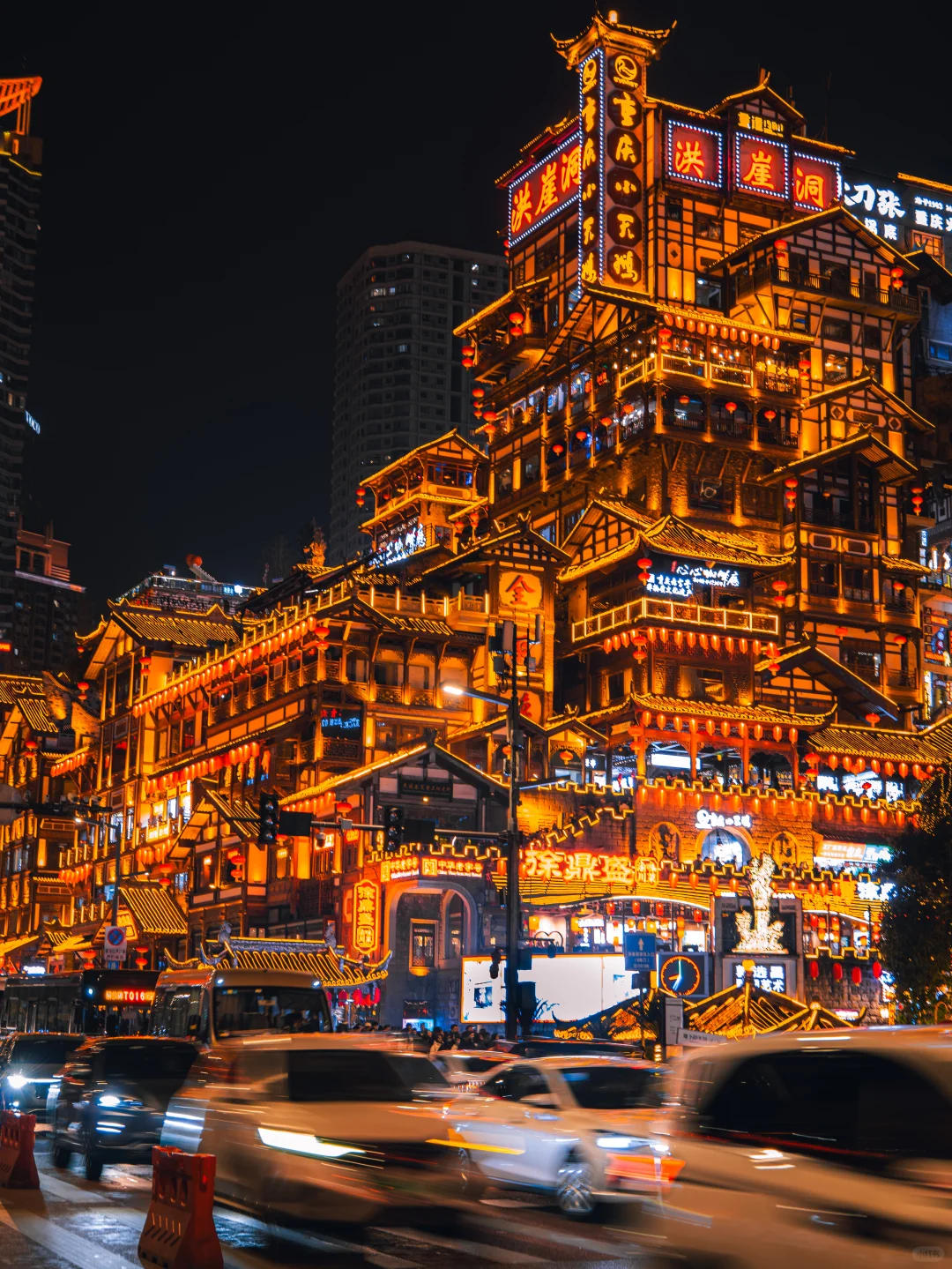
- Add Hongya Cave at night
- Review train-station luggage basics
FAQ
Is Chongqing public transport easy for visitors?
Yes, but it needs more buffer time than flat cities. Metro and monorail lines are useful, while station exits, hills, bridges, and transfers can make short routes feel longer.
Should I use taxis in Chongqing?
Use taxis or ride-hailing for late nights, luggage, rain, or awkward last-mile transfers. Metro is still better for predictable cross-city movement during busy traffic periods.
Why does Chongqing feel confusing on maps?
Chongqing is a layered hill city. Roads, bridges, buildings, and metro exits may sit at different elevations, so a route that looks adjacent can require stairs, elevators, or a detour.
Plan Your China Trip
Explore curated city guides and local travel stories to plan your next China itinerary.